
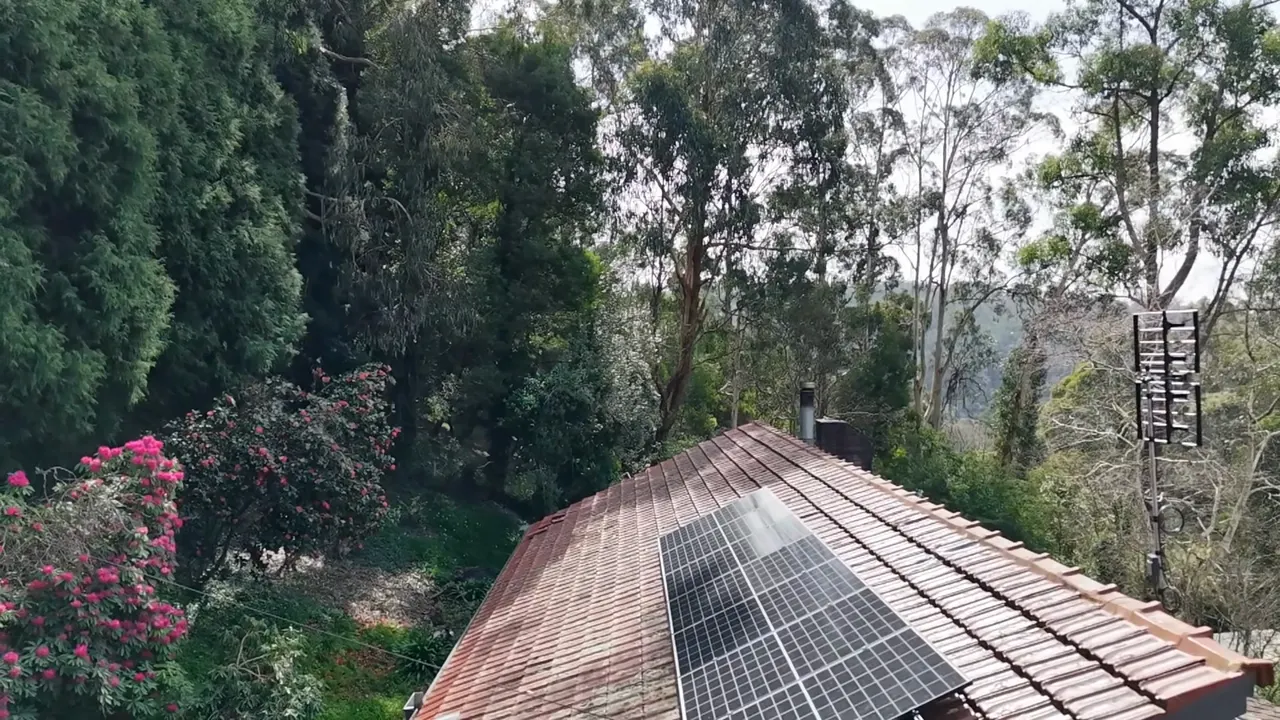
Solar panels don't ask for much. But a few simple habits help you catch problems early and keep your system producing what it should, year after year.
Start with your solar monitoring app
The easiest maintenance tool you have is already on your phone. Most inverters and batteries come with a monitoring app that shows how much power your system is making, how much you're using and how much you're sending to the grid.
You don't need to watch it every day. A quick look once a week, plus a closer look after a run of sunny days, is plenty. You're looking for anything that doesn't fit the pattern:
- Production that's much lower than it was on similar sunny days in previous weeks or the same month last year.
- A flat line during daylight hours, which can mean the inverter has stopped.
- The app showing "offline" or not updating for days, often a Wi-Fi issue rather than a solar one.
- A battery that never seems to charge fully or empties much faster than it used to.
Remember that output naturally drops in a Melbourne winter. Shorter days and a lower sun mean less energy. Compare like with like, such as this July against last July, rather than winter against summer.
When cleaning solar panels actually helps
For most Melbourne homes, rain does a decent job of keeping panels clean. A light film of dust usually makes only a small difference to output.
Cleaning is more likely to help if your panels sit flat or at a very low tilt, so dirt doesn't wash off easily. The same goes if birds roost nearby, there's heavy dust from building work, a busy road or farmland, you're close to the coast and salt builds up, or leaves collect along the bottom edge of the panels.
If cleaning is needed, do it from the ground with a soft brush or sponge on an extension pole and plain water. Skip harsh detergents, abrasive scrubbers and pressure washers, which can damage the glass, seals or coatings. Check your panel manufacturer's guidance too. Clean in the early morning or evening when the panels are cool, rather than splashing cold water on hot glass in the middle of the day.
Safety first: don't climb on the roof
We'll be blunt about this one. Please don't get up on the roof to clean or check your panels.
Roofs are slippery, especially when wet, and falls from a single-storey roof can cause serious injury. Solar panels and their cabling also carry electricity whenever there's daylight, and you can't simply turn them off at the switch. Walking on panels can crack the cells too, which may not be visible but can reduce output.
If the panels need more than a gentle clean from the ground, or you can see something wrong up there, call a professional with the right safety equipment and training.
Understanding inverter error codes and warning lights
Your inverter is the brains of the system. It converts the power from your panels into power your home can use, and it's usually the first place a problem shows up.
Most inverters have a status light or small screen. A green light generally means all is well. A red or orange light, or a message on the screen or app, means the inverter has noticed something. Common causes include grid voltage issues, an isolation or earth fault, a communication drop-out or the inverter getting too hot.
Some errors clear on their own once conditions return to normal. If an error keeps coming back, or the inverter stays off, take a photo of the code and the screen and get in touch. Don't open the inverter or poke around the isolator switches unless the manufacturer's shutdown steps tell you to, and even then only for those steps.
Watch for shading from trees and new buildings
Shade is one of the biggest causes of lost solar production, and it creeps up slowly. A tree that was well clear of the panels at install can grow into the sun's path a few years later. A neighbour's extension or a new double-storey next door can change things overnight.
Notice where shadows fall across your roof at different times of day, especially in winter when the sun sits lower. Regular tree trimming by an arborist can make a real difference. If shading is unavoidable, there may be equipment options worth discussing, depending on your system.
Periodic professional servicing
Even if everything looks fine in the app, it's sensible to have a licensed professional check the system every few years, or sooner if something seems off. A service typically includes:
- Checking the panels, mounting and roof fixings are secure.
- Inspecting cabling, connectors and isolators for wear, water entry or pest damage.
- Testing the inverter and electrical connections.
- Reviewing system performance against what it should be producing.
Things like rodents chewing cables or connectors working loose over time aren't something you can spot from the ground, so a professional set of eyes is worth it.
Looking after your home battery
Modern home batteries are mostly look-after-themselves. A few simple things help them do their job:
Keep the area around the battery clear so it can stay cool and well ventilated. Don't stack boxes against it or block its vents. Keep the Wi-Fi connection working so the battery can receive firmware updates and report its status. And check the app now and then to make sure it's charging and discharging as expected.
If you rely on your battery for backup during outages, it's worth knowing how your backup settings work. Our guide on battery backup during blackouts explains what to expect. If you don't have a battery yet, see whether it's worth it in is a home battery worth it.
Signs something is wrong with your solar system
Get in touch if you notice any of these:
A sudden or steady drop in production that doesn't match the weather. An inverter that's off, beeping or showing a repeated error. A burning smell, scorch marks or buzzing near the inverter, isolators or switchboard. Visible damage to panels, such as cracks or discolouration. Water getting into the switchboard or isolators. Or a power bill that jumps without a clear reason.
If you ever see smoke or signs of burning, keep clear and call emergency services first.
Common questions
How often should I clean my solar panels in Melbourne?
Many homes rarely need it, because rain does most of the work. Clean from the ground only if you can see a build-up of dirt or droppings, or your monitoring shows a drop that cleaning might explain.
Why is my solar producing less in winter?
Shorter days, a lower sun and more cloud all reduce production in winter. That's normal. Compare your output with the same month in previous years rather than with summer.
Is it safe to hose my solar panels?
A gentle rinse with plain water from the ground is generally fine. Avoid pressure washers, harsh chemicals and climbing on the roof, and check your panel manufacturer's cleaning guidance first.
Talk to a local team
We're based in Clayton and look after solar and battery systems across Melbourne and Victoria with our own licensed team. If your system isn't performing the way it should, have a look at our solar and battery services, then get energy advice or call 1300 289 803.