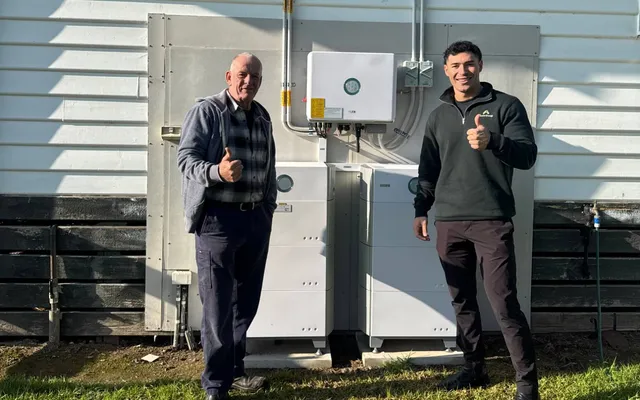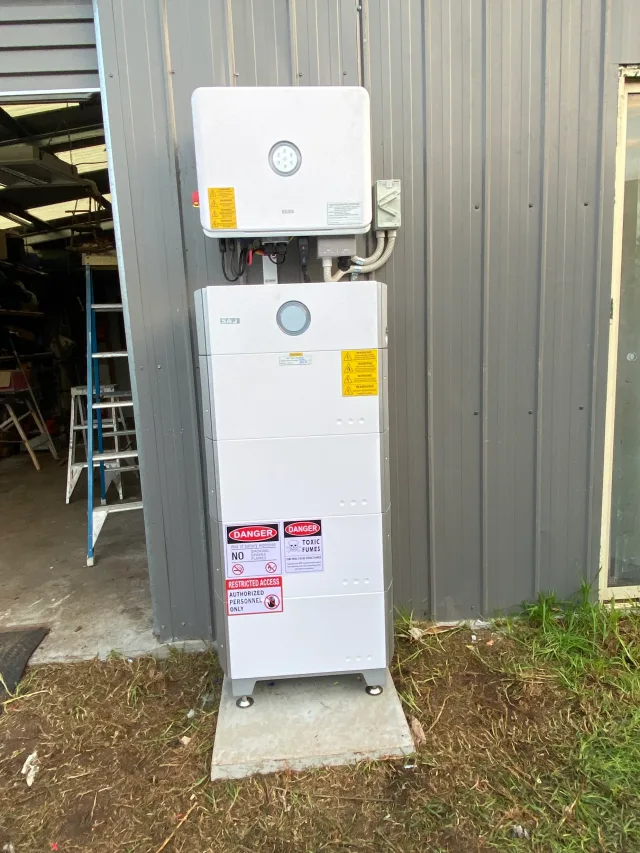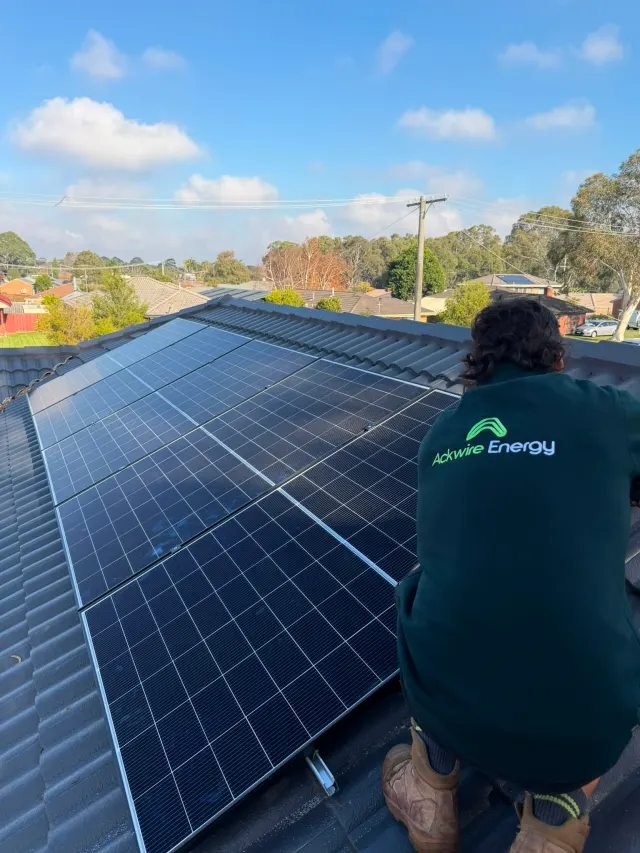

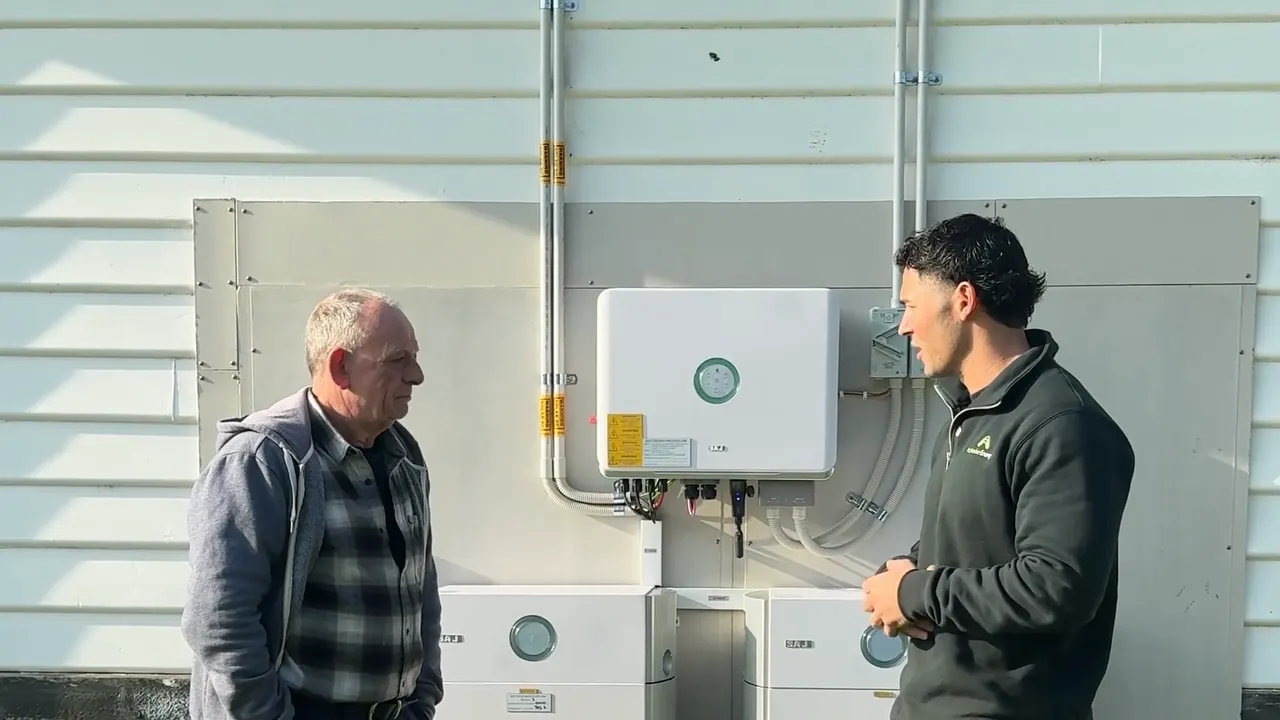
A home battery stores the solar you don't use during the day so you can use it at night. Whether that's worth it for your Victorian home comes down to how and when you use power, and what you want the battery to do.
How a home battery actually saves you money
Without a battery, solar works on a simple pattern. Your panels power the house during the day. Anything left over goes to the grid, and you get a feed-in credit for it. Once the sun goes down, you buy power from the grid again.
The catch is the gap between those two prices. Feed-in tariffs in Victoria are now much lower than what you pay to buy electricity, especially in the evening. So every kWh you export earns a little, and every kWh you buy back costs a lot more.
A battery closes that gap. Instead of exporting your spare solar for a small credit, you store it and use it after dark. That's called self-consumption, and it's where most of a battery's value comes from. The bigger the difference between your feed-in rate and your evening rate, the more each stored kWh is worth.
Your evening usage is the key number
The households that get the most from a battery use a fair bit of power between late afternoon and bedtime. Think cooking, heating or cooling, TVs, washing, kids' devices and lights. If most of your usage happens after the sun goes down, a battery has plenty of work to do.
If you're home all day and already use most of your solar directly, a battery may have less to store. And if your solar system is small, you might not have much spare energy to put into a battery in the first place, particularly in winter.
A good starting point is your interval data, which most Victorian retailers and distributors can provide. It shows your usage in half-hour blocks, so you can see exactly how much you use in the evening and overnight. We look at this during a home check to size a battery properly.
Time-of-use tariffs and batteries
Many Victorian homes are on time-of-use tariffs, where electricity costs more in a peak window, usually in the late afternoon and evening, and less at other times. A battery suits these tariffs well, because it can cover your usage during the expensive peak period.
Some batteries can also be set to charge from the grid at cheaper times if your solar falls short, such as on a run of grey winter days. Whether that helps depends on your tariff, so it's worth reviewing your plan once a battery is in. The right tariff can make a real difference to what a battery saves you.
Backup power during blackouts
For some people, the main reason to get a battery isn't the bill at all. It's keeping the fridge, lights, internet and other essentials running when the grid goes down.
Not every battery does this automatically. Backup depends on the inverter, how the system is wired and which circuits are connected. We've covered this in detail in will my battery work in a blackout, but the short version is: if backup matters to you, say so at the start so the system is designed for it.
Virtual power plants in plain English
A virtual power plant (VPP) links lots of home batteries together so an energy company can draw on them when the grid needs extra supply. In return, you usually get some form of credit, payment or a better electricity plan.
VPPs can add value, but the terms vary a lot between providers. Things to check include how much of your battery they can use, whether you keep enough charge for your own evening needs and backup, and what happens if you want to leave. Some battery rebate programs have also linked eligibility to being VPP-capable, so it's worth asking about when you get a quote.
Who a battery suits, and who might wait
A battery is often a good fit if:
- You already have solar and export a lot of it during the day
- Your household uses a lot of power in the evening
- You're on, or happy to move to, a time-of-use tariff
- You want backup power for essentials during outages
- You're planning to electrify, such as replacing gas heating or adding an EV
It might be worth waiting, or rethinking the plan, if your solar system is small and rarely exports much, if your evening usage is already low, or if you're likely to move house soon. In some cases, adding more panels first gives you more spare energy to make a battery worthwhile later. If your current system is due for an upgrade, our guide on how much solar you need is a good place to start.
Rebates and the upfront cost
The federal Cheaper Home Batteries Program reduces the upfront cost of eligible home batteries, and other state programs have offered support at different times. Amounts and eligibility change, so check our rebate checker or ask us what currently applies to your home. We apply the available discounts on your quote so you can see the real cost.
Choosing the right battery
Battery size is measured in kWh of usable storage. Bigger isn't always better. A battery that's too large for your solar system won't fill up most days, and one that's too small runs flat early in the evening. The right size matches your spare solar to your evening usage.
We install batteries from Tesla, Sungrow, LG Energy Solution, GoodWe, SAJ, Sofar and Anker, so we can match the battery to your home rather than push one brand. You can see more on our battery page.
Common questions
Can I add a battery if I already have solar?
Usually, yes. Depending on your existing inverter, a battery can be added alongside it or with a new hybrid inverter. See our guide to adding a battery to existing solar.
Will a battery take me completely off the grid?
For most Melbourne homes, no. Winter solar output is often too low to fully charge a battery every day. Most homes stay connected and use the battery to cut how much they buy, especially at peak times.
How long does a home battery last?
That depends on the brand, how hard it's used and the manufacturer's warranty terms. Ask your installer to walk you through the warranty for the specific battery you're considering.
Talk to a local team
Our own licensed team installs batteries across Melbourne and Victoria from our base in Clayton. We'll look at your usage and solar, then tell you straight whether a battery makes sense now or later. Get energy advice or call 1300 289 803.