
Picking a solar system size can feel like guesswork. It isn't. With your power bills, a look at your roof and a bit of thought about the next few years, you can land on a size that suits your home in Melbourne.
Start with your electricity bills
The best place to begin is your own usage. Grab a year of electricity bills, or log in to your retailer's app, and find your average daily usage in kilowatt-hours (kWh). Most bills show this as a figure per day for the billing period.
A full year matters because Melbourne usage swings with the seasons. Many homes use more in winter with heaters running and the lights on earlier. Others peak in summer when the air conditioning works hard. Looking at one quarter alone can push you too big or too small.
Also look at when you use power. A household where someone works from home or runs the dishwasher and washing machine during the day will use more solar directly. A household that's empty from 8 to 6 will send more of its solar to the grid and buy more back at night.
How much power does solar make in Melbourne?
A widely used rule of thumb is that each kilowatt (kW) of solar panels in Melbourne produces roughly 3.5 to 4 kWh per day, averaged across the year. That average hides a big seasonal swing. A clear January day can produce far more than that, while a grey July week produces a lot less.
So a 6.6 kW system might make somewhere around 23 to 26 kWh on an average day across the year. A 10 kW system, proportionally more. Your actual output depends on roof direction, tilt, shading and the weather, which is why a site visit beats a calculator.
For a typical family home, systems are often in the 6.6 to 10 kW range. Smaller homes with low usage may suit less. Larger homes, or homes planning to go all-electric, often suit more.
Roof space and orientation
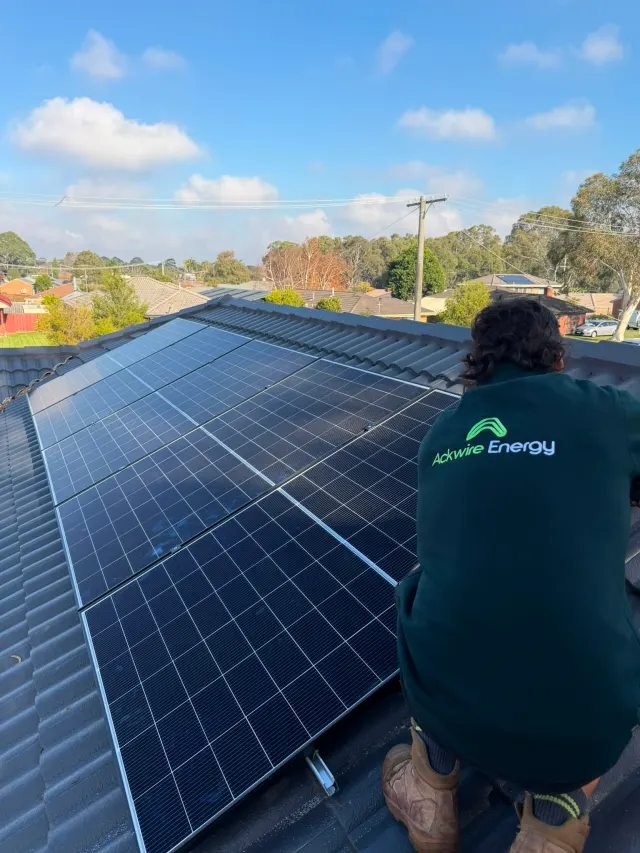
Your roof sets the upper limit. A modern residential panel takes up roughly 2 square metres, so a 6.6 kW system usually needs somewhere around 14 to 16 panels depending on panel wattage. You also need to allow for setbacks from edges, vents, skylights and roof features.
Direction matters too:
- North-facing roofs produce the most energy across the day in Melbourne.
- East and west-facing roofs still work well. East catches the morning, west catches the afternoon and early evening, which can line up nicely with when families get home.
- South-facing roofs produce noticeably less and usually only make sense when other faces are full or shaded.
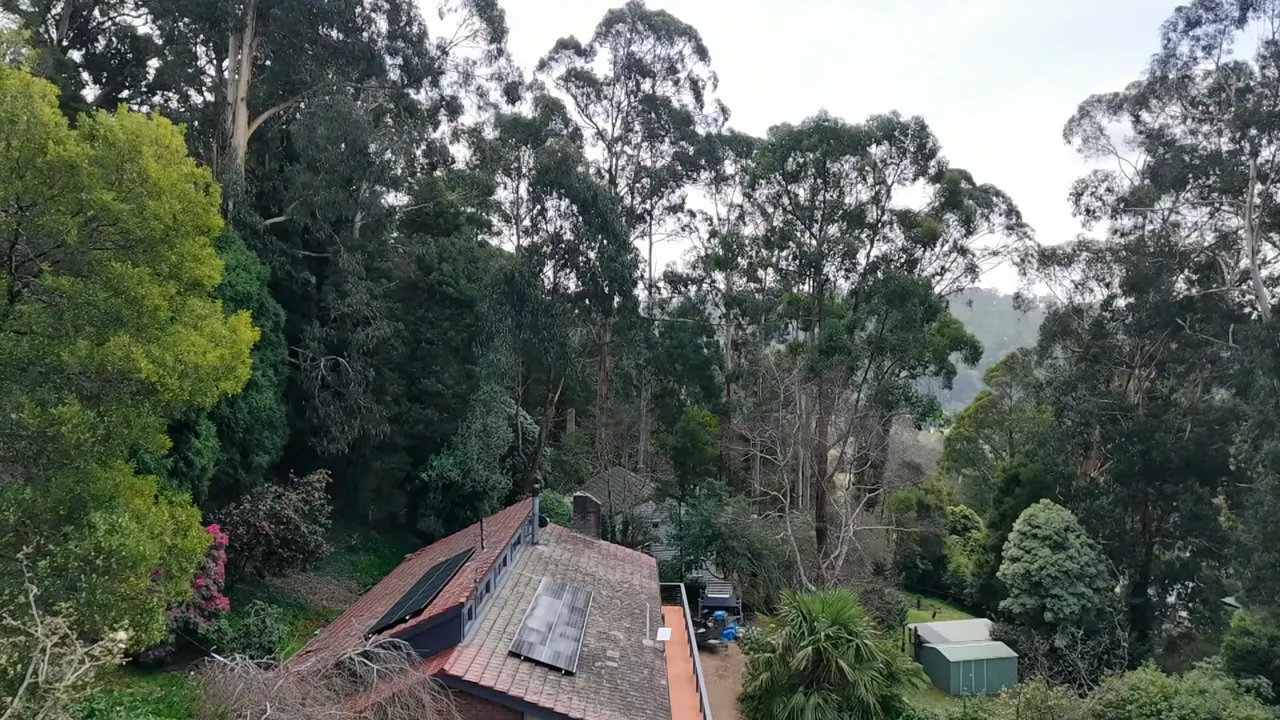
- Shading from trees, neighbouring buildings or a second storey can cut output more than people expect, especially in winter when the sun sits low.
Splitting panels across two roof faces, such as east and west, is common and can spread generation more evenly through the day.
Inverter sizing explained simply
The inverter converts the power your panels make into power your home can use. Its size is listed in kW, just like the panels, but the two numbers don't have to match.
It's normal, and allowed within the rules, to install a bit more panel capacity than the inverter rating. Panels rarely hit their full rated output in real conditions, so a slightly oversized array gets more out of the inverter for more of the day. That's why you'll often see systems quoted as, for example, 6.6 kW of panels on a 5 kW inverter.
Your electricity distributor also sets limits on inverter size and how much you can export to the grid. These depend on your network and whether your home is single-phase or three-phase. A good installer checks this and handles the network application for you, so you don't end up with a system the network won't approve.
Plan for the next five to ten years
A solar system is a long-term purchase, so size it for the home you'll have, not just the one you have today. Are you likely to buy an electric vehicle and charge it at home? Add a home battery to store daytime solar for the evening? Replace gas heating with reverse-cycle air conditioning, or switch to heat pump hot water? Even kids growing into teenagers, or a new pool, can lift usage.
Each of these adds electricity use. Going all-electric can shift a big chunk of energy from your gas bill onto your power bill, and solar is one of the cheapest ways to cover it. If an EV is on the cards, our guide to EV charging on solar explains how the two work together.
Adding panels later is possible, but it often costs more per panel than doing it once, and matching new panels to an older system isn't always simple. If you're on the fence, a little extra capacity now is usually the easier path.
Why bigger often makes sense with low feed-in tariffs
Years ago, people sized solar to export as much as possible because feed-in tariffs were generous. That's changed. Feed-in tariffs in Victoria are now much lower than the price you pay to buy power from the grid.
That shifts the goal. The most valuable solar is the solar you use yourself, because every kWh you use directly is one you don't buy. A slightly bigger system covers more of your usage on cloudy days and through winter, when output drops. It leaves enough spare energy to charge a battery or an EV. And the cost per kW usually falls as systems get bigger, because much of the install cost is fixed.
There's a balance, of course. If your usage is low and you have no plans to electrify, a very large system may just export more at a low rate. That's where an honest conversation about your bills helps.
Rebates can change the maths
Federal Small-scale Technology Certificates (STCs) reduce the upfront cost of most home solar systems, and Solar Victoria rebates may apply depending on what's on offer and your circumstances. Amounts and eligibility change, so it's worth checking our rebate checker or asking us for the current picture before you settle on a size.
Common questions
Is 6.6 kW enough for a family of four?
It often is for a household with average usage and gas heating. If you're planning an EV, a battery or moving off gas, it's worth looking at something larger. Your bills and future plans are a better guide than household size alone.
Can I add more panels to my system later?
Usually, yes, but it depends on your inverter's capacity, your roof space and network limits. In many cases you'll need a second or larger inverter. Sizing for the future at the start tends to be simpler.
Will solar work in a Melbourne winter?
Yes. Output is lower in winter because days are shorter and the sun is lower, but panels still produce on overcast days. That's one reason many Melbourne homes size up a little.
Talk to a local team
Ackwire Energy is based in Clayton and installs solar and batteries across Melbourne and Victoria with our own licensed team. We'll look at your bills, check your roof and recommend a size that fits your home and your plans. Get energy advice or give us a bell on 1300 289 803.